
 EN
EN
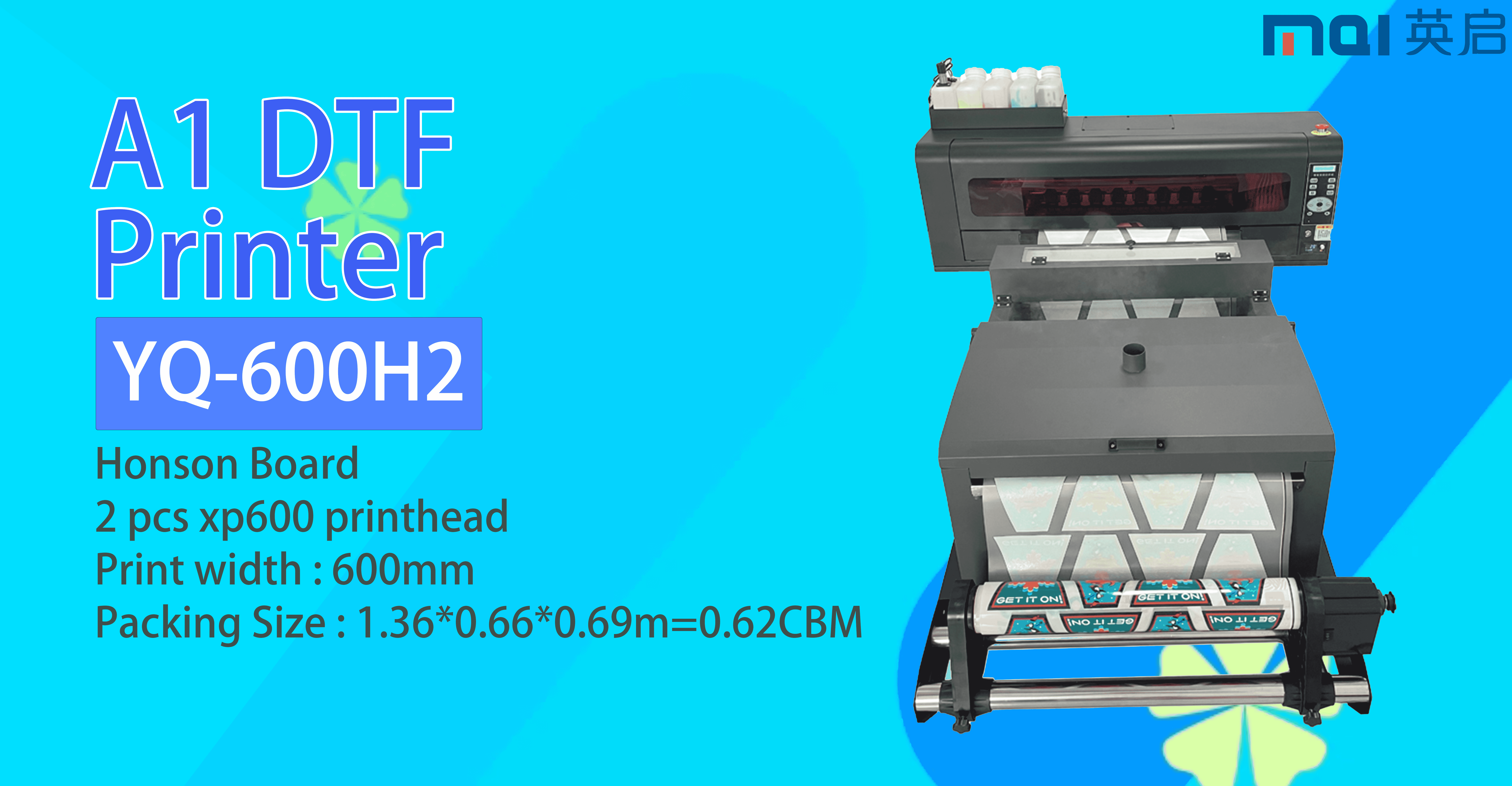
Scalable DTF Printer Hardware: Width, Speed, and Feed Options for High-Volume Production
Roll-to-Roll vs. Sheet-Fed DTF Printers: Throughput, Labor, and Media Waste Trade-Offs at 500+ Units/Day
Businesses making over 500 units each day find roll-to-roll DTF printers really boost their output since they don't need anyone manually loading sheets all day long. This cuts down on labor expenses around 25% when compared to those old school sheet fed machines. The continuous feed system works with smart alignment tech that keeps material waste below 3%. Contrast that with sheet fed models which typically throw away somewhere between 8 to 12% of materials due to those annoying margin trims and alignment issues nobody wants. These roll based systems also play nice with automated curing lines so factories can run non stop day after day. Sheet fed printers still have their place though, especially when dealing with small batches of complex designs where being able to quickly change setups matters more than just cranking out volume.
Dual-Head and A1-Series DTF Printers: Maximizing Output per Square Foot Without Compromising Print Quality
The dual head design of industrial DTF printers allows them to produce twice as much output in the same space simply because they have two parallel printing paths working at once. These machines can reach speeds of around 23 square meters per hour when running at maximum 1200dpi resolution. What makes this possible? Well, it starts with careful calibration of those piezoelectric printheads to stop colors from bleeding together. Then there are those dynamic ink saturation controls which help maintain the soft feel of fabrics after printing. And let's not forget about the memory foam platens either. They play a crucial role in keeping everything flat during those long production runs, ensuring consistent quality from start to finish.
A1-series wide-format printers (0.6m width) further elevate productivity through gang-sheet layouts, improving media utilization by 30%. Built-in thermal monitoring prevents nozzle clogs during sustained operation—a critical safeguard for batch consistency across 10,000+ transfers.
Speed Benchmarks (8—35+ m²/hr): Translating DTF Printer Speed into Real-World Batch ROI and Labor Savings
Print speed directly determines labor dependency and capital efficiency. A 35m²/hr DTF printer automates 78% of manual tasks handled by entry-level 8m²/hr models. At scale, facilities observe:
| Speed Tier | Units/hr | Operator Attention (min/hr) | ROI Period |
|---|---|---|---|
| Sub-15m²/hr | 60—80 | 45 | 18—24 months |
| 25—35m²/hr | 220—300 | 12 | 11—14 months |
Firmware-optimized ink delivery and intelligent idle-state power management reduce per-unit costs by 40%. Production analytics confirm each 5m²/hr speed increase lowers labor expenditures by $2.30 per 100 garments.
Production-Ready DTF Workflow Components: Curing, Powder Application, and RIP Software for Enterprise Scale
Enterprise-grade DTF printing demands tightly integrated subsystems—curing, powder application, and RIP software—to sustain throughput, quality, and repeatability at scale.
Integrated vs. Standalone Curing Systems: Energy Use, Line Synchronization, and Consistency Across 10k+ Garments/Month
When curing units are built right into the printer itself, they apply heat at exactly the same time as printing finishes. This gets rid of those annoying wait times when moving stuff manually between machines and saves around 15 to 22 percent on energy compared to separate ovens according to industry reports from last year. At facilities producing over ten thousand items each month, these built-in systems keep temperatures stable within about plus or minus two degrees Celsius. That helps avoid problems like weak glue bonds or burned fabrics. Separate ovens require extra hands-on work and tend to produce inconsistent results, which is why most shops stop using them once production volume goes past basic levels.
Automated Powder Shakers and Recovery Systems: Ensuring Adhesion Uniformity and Reducing Material Waste in Bulk DTF Printing
The problem of uneven adhesive coverage becomes a thing of the past when automated powder application comes into play, especially for those dealing with large scale production runs. These closed loop systems come equipped with electrostatic applicators along with vacuum recovery mechanisms. They manage to get around 95% efficiency from the powder used, since they catch what gets wasted and put it back into circulation. This means about half as much material ends up going to waste compared to what happens during manual applications. Thickness monitoring happens continuously through real time sensors that tweak how the powder is sprayed across surfaces. The result? A coating depth somewhere between 0.1 mm and 0.3 mm thick consistently applied throughout. Not only does this prevent annoying pinhole issues, but workers also breathe easier knowing there's less dust floating around in the air.
Cost-Efficiency Drivers in Bulk DTF Printing: Per-Unit Economics, Setup Optimization, and Waste Reduction
ROI Acceleration: How Gang Sheet Layouts, Reduced Operator Touchpoints, and Firmware Automation Cut Payback to <14 Months
The real money savings in enterprise DTF setups come not so much from fancy hardware specs as they do from smart workflow design. Take gang sheet nesting for instance it can cut down on media expenses anywhere between 15 to 22 percent. And when companies implement firmware automation, they see around 80% less need for people to manually adjust things all day long. Throw in inline powder application too, and we're talking about cutting labor time by nearly half per thousand shirts produced. This means most businesses get their investment back within just under 14 months according to recent industry reports. Some shops that have adopted automated job queuing systems along with sensors that handle calibration automatically are seeing throughput jump upwards of 30% without hiring any extra staff members either.
Ink Yield, Powder Recovery, and Media Utilization: Quantifying Waste Reduction Levers in Enterprise DTF Printer Deployments
Precision consumables management delivers measurable cost savings. Optimized DTF printers achieve:
| Waste Lever | Industry Average | Optimized System | Impact on Cost/Print |
|---|---|---|---|
| Ink Yield | 70% | 92% | 18% reduction |
| Powder Recovery | 60% | 88% | 24% reduction |
| Media Utilization | 75% | 95% | 21% reduction |
Together, these levers reduce consumable expenses by $0.38 per garment—an essential advantage when scaling bulk operations profitably.
Seamless Enterprise Integration: DTF Printer Connectivity, Automation, and Heat Press Ecosystem Compatibility
For real efficiency in enterprises, DTF printers need to work together as part of a network rather than standing alone as separate machines. These days, most systems come with MQTT and RESTful API capabilities that let them talk to ERP and MES platforms in real time. What does this mean? Well, it automatically handles things like scheduling print jobs, sending warnings when ink runs low, and even predicting when maintenance might be needed. The effect is pretty significant actually. We've seen operations cut down on manual interventions by around 40%, which frees up staff for other tasks. Plus, everything flows better downstream too, especially during heat pressing stages where timing matters a lot.
When working with industrial heat presses, we get much better results because the transfer conditions stay pretty much the same every time around. Usually around 150 to 160 degrees Celsius with pressure between 4 and 5 bars works well for most fabrics, which means fewer problems with stuff not sticking properly after printing. The conveyor belts that run on sensors help connect the printing part with the curing stage too. They keep things moving within about half a second accuracy most of the time, so there aren't those annoying slowdowns in production. Looking at how everything fits together, the DTF printer really takes charge of the whole process from start to finish when decorating clothes. It coordinates all these different steps much better than separate machines ever could.
Frequently Asked Questions
What is the main advantage of roll-to-roll DTF printers over sheet-fed printers?
Roll-to-roll DTF printers improve output and reduce labor costs by automating the feed process, minimizing manual interventions, and decreasing material waste compared to sheet-fed models.
How does dual-head DTF printer design enhance productivity?
Dual-head DTF printers double output in the same amount of space by having two parallel printing paths, which allows for faster and more efficient printing without sacrificing quality.
What are integrated curing systems, and how do they benefit large-scale DTF printing?
Integrated curing systems built directly into the printer align heating exactly with the printing process, saving energy, reducing manual handling, and providing consistent results across large volumes of production.
How do gang-sheet layouts contribute to cost savings in DTF printing?
Gang-sheet layouts optimize media usage and reduce costs by maximizing the number of designs printed on a single sheet, leading to significant savings in media expenses and reducing overall production costs.
Table of Contents
-
Scalable DTF Printer Hardware: Width, Speed, and Feed Options for High-Volume Production
- Roll-to-Roll vs. Sheet-Fed DTF Printers: Throughput, Labor, and Media Waste Trade-Offs at 500+ Units/Day
- Dual-Head and A1-Series DTF Printers: Maximizing Output per Square Foot Without Compromising Print Quality
- Speed Benchmarks (8—35+ m²/hr): Translating DTF Printer Speed into Real-World Batch ROI and Labor Savings
- Production-Ready DTF Workflow Components: Curing, Powder Application, and RIP Software for Enterprise Scale
- Cost-Efficiency Drivers in Bulk DTF Printing: Per-Unit Economics, Setup Optimization, and Waste Reduction
- Seamless Enterprise Integration: DTF Printer Connectivity, Automation, and Heat Press Ecosystem Compatibility
- Frequently Asked Questions