
 EN
EN
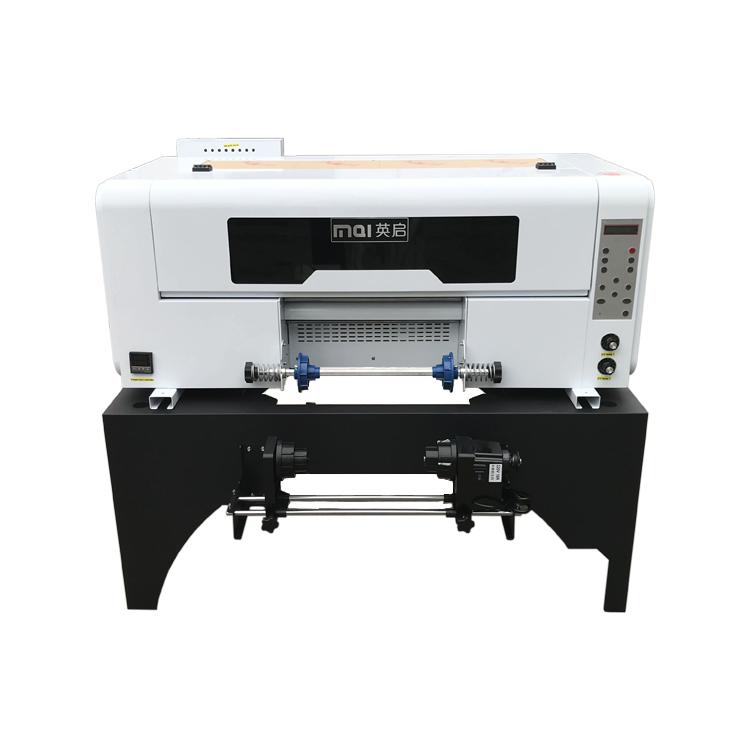
UV DTF Printers: The Core Enabler of On-Demand Packaging Personalization
UV DTF printers revolutionize packaging customization by removing legacy production constraints—enabling brands to deliver unique, high-fidelity designs without minimum order quantities or lengthy lead times.
How UV DTF printers eliminate traditional barriers—no screens, plates, or heat presses
Old school decoration techniques depend heavily on physical screens, those fancy etched plates, and all sorts of heat transfer machines. Each of these comes with its own set of problems when it comes to money spent, time wasted, and how complicated everything gets. Just making those screens can take over 48 hours for each individual design. And let's not forget about the costs involved with plates either. According to research from Ponemon back in 2023, companies producing moderate volumes end up spending well over seven hundred forty thousand dollars every year on plate related stuff. UV DTF printing changes all that by using this cold transfer digital process instead. The artwork basically gets printed straight onto special film first, then sticks to whatever surface needs decorating without needing any heat, pressure, or extra tools. No more having to store tons of screens and plates around, no wasting energy on heat presses, and definitely fewer man hours lost during setup. We're talking about cutting down roughly twelve hours worth of work just for each job. What does this mean practically? Packaging prototypes that used to take days to get from idea to actual sample can now be produced within less than ninety minutes flat.
Key technical advantages: instant curing, CMYK+white flexibility, and sub-50μm dot precision
Three foundational innovations drive UV DTF’s print quality and versatility:
- Instant UV curing – Inks polymerize in under 0.8 seconds under UV-LED lamps, accelerating throughput sixfold versus solvent-based alternatives
- CMYK+White flexibility – White ink provides opacity on dark or transparent substrates and enables metallic, translucent, and spot-color effects
- Sub-50μm resolution – Precision droplet control renders crisp 2pt text and smooth 10-micron gradients with zero moiré
| Capability | Traditional Method | UV DTF Printer |
|---|---|---|
| Curing Time | 15–30 minutes | <1 second |
| Color Gamut | 80% Pantone® coverage | 95% Pantone® coverage |
| Minimum Detail | 100μm dots | 45μm dots |
This combination supports photographic-grade reproduction on complex packaging surfaces—achieving 98.5% color accuracy without pre-press adjustments and cutting time-to-market for limited editions.
Overcoming Substrate Limitations Across Packaging Materials
Adhesion science: dual-cure (UV + thermal) bonding on glass, PET, aluminum, and coated ceramics
The UV DTF technology actually gets around those tricky material issues by using what's called a dual cure adhesion system. Basically, it starts with UV light creating surface grip, then adds thermal activation that works its way into those tiny little pores we can't even see. What makes this really work is how it bonds at a molecular level, sticking firmly to all sorts of surfaces that normally give problems. Think about things like glass bottles with curves, aluminum cans, plastic containers made from PET, and even ceramic items that have been glazed. No need for extra primers or corona treatments here. Tests done according to ASTM D3359 standards show these bonds are about three times stronger compared to regular transfer techniques. Plus, the chemical cross linking creates seals that stand up to water pretty well too, which matters a lot when dealing with products that might get exposed to moisture regularly.
Real-world validation: durability testing (abrasion, wash, flex) for cosmetic and beverage packaging
Third-party validation confirms UV DTF’s resilience in real-world distribution and consumer use. Cosmetic containers withstand 500+ abrasion cycles (ASTM F2357) with no image degradation; beverage labels endure 72-hour immersion tests without ink bleed or delamination. Additional benchmarks include:
- Thermal flex cycling from –20°C to 60°C—validating global shipping readiness
- Resistance to alcohols, pH-shifted solutions, and common cosmetic solvents
- 180° peel adhesion exceeding 28 N/cm
These results support direct decoration on sustainable substrates like recycled aluminum and glass—eliminating plastic overlaminates while complying with FDA 21 CFR food-contact safety standards.
Enabling Complex Geometries and Textured Surfaces
Conformal transfer process: how UV DTF handles curves, embossing, and irregular contours
UV DTF works through what's called a conformal transfer method. Basically, these special adhesive films with tiny channels can wrap around pretty much any shape they need to. They stick to curved surfaces with radii as big as 130 degrees and even grab onto those really small embossed details that are just 0.2mm deep. No more air bubbles getting trapped or images stretching out of shape. The print quality is amazing too, down to dots smaller than 50 microns. This means all those intricate grain patterns, tiny engravings, and brand logos come out looking sharp and clean, even when printing inside tricky corners or narrow spaces. What makes this process so good for fragile materials? Well, there's no heavy pressing involved and no need to heat things up. Just apply the ink and then zap it with UV light, which sets everything in place almost instantly. This fast curing time opens up possibilities for printing on complicated shapes without going through multiple steps like traditional decals or pad printing methods.
Case evidence: premium candle jars, textured wood boxes, and tapered beverage cans
Real world applications show how well these technologies work in different situations. Take a high end candle company that managed to get nearly perfect stickiness (around 98%) on those tricky curved glass containers with their 12mm tapered necks. Their labels stayed put even when exposed to extreme temperature changes from freezing cold to hot summer conditions. When it comes to wooden gift boxes with interesting textures, the UV DTF process does an amazing job replicating the natural wood grain patterns at very high resolution (about 1200dpi) without losing the actual feel of the surface. Beverage companies have also seen great results with their aluminum cans. No peeling issues were found after hundreds of times going in and out of refrigerators, plus they passed all the standard wear tests required by industry regulations. A cosmetic manufacturer recently cut down their packaging design timeline by almost three quarters for special edition products with unique textured surfaces. Production numbers back this up too, showing reliable results throughout over 100 thousand units despite all the different curve shapes involved.
Driving Profitable Short-Run & One-Off Custom Branding for E-Commerce
Economic impact: slashing setup time by 70% and enabling true no-MOQ production
UV DTF changes how packaging gets made because it cuts out all those old school setup costs. No need to burn screens, engrave plates, or calibrate heat presses anymore. This saves about 70% of what used to take so long before production starts. What does that mean? Real no minimum order quantity stuff becomes possible. E-commerce companies can now make just one unit if they want, create super personalized boxes, or design packages specifically for different regions. The numbers back this up too. According to Ponemon's research from last year, businesses save around $740,000 each year on average thanks to less wasted materials, cheaper storage costs, and quicker switches between product types. With instant job switching capability, companies profit from making limited edition runs, holiday themed packaging, or special collaboration designs without worrying about having to produce massive batches first.
FAQ
What is UV DTF printing?
UV DTF (Direct to Film) printing is a digital printing process that transfers designs directly onto various surfaces without the need for heat, pressure, or additional tools.
How does UV DTF contribute to reducing setup costs?
By eliminating the need for traditional setup processes like screen creation and plate engraving, UV DTF printing reduces setup time by 70%, enabling faster production startup.
Can UV DTF printing handle complex shapes and materials?
Yes, UV DTF technology can adapt to various substrate surfaces such as glass, PET, aluminum, and ceramics, while also managing complex geometries like curves and embossing.
Is UV DTF printing environmentally friendly?
UV DTF supports sustainable practices by enabling direct decoration on sustainable materials like recycled aluminum and glass, reducing the reliance on plastic overlaminates.
What are the durability advantages of UV DTF printed products?
UV DTF printed products are highly durable, withstanding multiple cycles of abrasion, extreme temperatures, and exposure to moisture without image degradation.