
 EN
EN
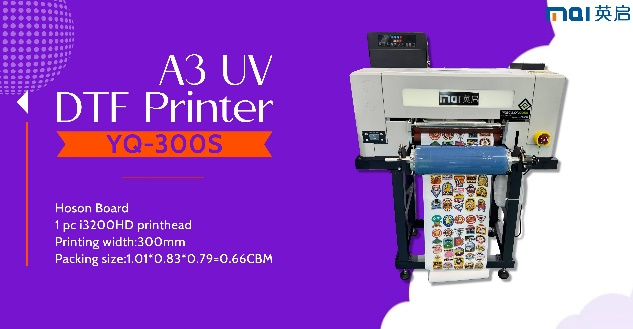
How UV DTF Printing Works and Its Substrate Compatibility
The UV DTF Printing Process: From Design to Transfer
UV DTF printing leverages digital precision and material adaptability through a streamlined three-stage workflow:
- Design Preparation: Artwork is optimized for ink layering and UV curing using RIP software
- Film Printing: Designs are printed onto PET-based transfer film with UV-LED-curable inks that instantly harden under 395–410 nm light
- Transfer Application: The cured film is bonded to substrates using heat (60–120°C) and pressure (2–5 bar)
This indirect method avoids the nozzle clogging issues common in direct UV printing, supporting resolutions up to 1440 dpi—even on uneven or challenging surfaces.
Role of DTF Film in Enabling Indirect Printing Across Materials
The 75–125 micron transfer film performs several critical functions:
- Surface Leveling: Compensates for substrate roughness up to 200 µm
- Ink Carrier: Holds 7–12 layers of CMYK+white ink without bleeding
- Adhesive Layer: Contains thermally-activated polyurethane resins achieving 25–40 N/cm² bond strength
By acting as an intermediary, the film allows successful printing on materials with surface energies as low as 36 mN/m—such as untreated polypropylene—compared to the 42 mN/m typically required for direct UV printing.
Common Substrates Compatible with UV DTF: Glass, Metal, Wood, Plastics, Textiles
A 2023 substrate compatibility study evaluated adhesion and performance across key materials:
| Material | Adhesion (ISO Class) | Max. Flexibility | Recommended Use Cases |
|---|---|---|---|
| Anodized Aluminum | 5B (ASTM D3359) | None | Industrial labels, nameplates |
| Tempered Glass | 4B | None | Drinkware, decorative panels |
| HDPE Plastics | 3B | 180° bend radius | Packaging prototypes |
| Cotton-Poly Blends | 4B | 4% elongation | Apparel branding |
Thanks to hybrid ink systems, UV DTF maintains 85–93% color gamut coverage across diverse substrates, meeting ISO 12647-2 standards for consistent output.
Printing on Rigid Materials: Capabilities and Real-World Applications
Adhesion Mechanisms and Surface Preparation for Rigid Substrates
Getting good bonds on hard surfaces really comes down to getting the surface right before applying anything. For stuff like glass, metal, and wood, cleaning off all the grease and giving it a quick sand helps create tiny scratches where things can actually grab onto. With UV inks, they sort of melt into the surface as they dry out. When working with metal surfaces, plasma treatment works wonders too many shops report way fewer problems sticking things together after this process. And if dealing with woods that soak up liquids easily, using those solvent based primers makes a big difference in how well coatings stick around.
UV DTF on Glass, Metal, and Wood: Popular Uses in Signage and Décor
The technology’s versatility supports high-value applications across industries:
- Architectural glass: Frosted office partitions with embedded corporate branding
- Anodized aluminum: Long-lasting wayfinding signs maintaining color accuracy for over five years
- Engineered wood: Custom retail displays resistant to humidity-induced warping
From luxury interiors to industrial safety labeling, UV DTF enables both high-margin industrial applications and permanent outdoor installations, thanks to its durability and design fidelity.
Flatbed UV DTF Printers for Direct Rigid Material Printing
Advanced flatbed systems handle materials up to 4" thick, printing at speeds of 6m²/hour with 1200 dpi resolution. Vacuum beds securely hold stainless steel, acrylic, and composites during printing, eliminating the need for transfer films in direct-application workflows.
Durability, Scratch Resistance, and Outdoor Performance of Prints
Prints on rigid substrates meet rigorous performance standards:
- Withstand 50+ Taber abrasion cycles (ASTM D4060)
- Operate in temperatures from -40°F to 300°F
- Retain over 85% color after 3 years of outdoor exposure (Q-Lab testing)
Laminated aluminum composite (ACM) panels maintain legibility in extreme environments, making them a preferred alternative to vinyl wraps in transportation and construction signage.
Printing on Flexible Materials: Overcoming Challenges with Advanced Inks
Challenges of Ink Cracking and Delamination on Flexible Surfaces
Regular UV inks tend to crack when applied to flexible materials like silicone or polyester after being bent multiple times. One big reason behind this problem is surface tension issues. Most flexible plastics need at least around 42 dynes per centimeter of surface energy to properly stick to anything. That's why many manufacturers end up using pretreatment methods. Plasma treatment works wonders, but even good quality primers can boost adhesion rates by roughly 70 percent over what we see on surfaces that haven't been treated at all. This makes a huge difference in production settings where durability matters most.
Flexible and Hybrid UV Inks: Enhancing Stretch and Bend Resistance
Hybrid UV inks blend acrylic resins with polyurethane additives, enabling elongation rates of 250–300% while preserving color vibrancy. As shown in material flexibility studies from leading manufacturers, these formulations endure 10,000+ bend cycles without delamination. Key characteristics include:
| Ink Type | Elongation % | Wash Resistance | Cure Speed |
|---|---|---|---|
| Standard UV | 3-5% | Moderate | 0.8 sec |
| Flexible UV | 120-150% | High | 1.2 sec |
| Hybrid UV | 200-300% | Excellent | 1.5 sec |
Comparing Rigid, Flexible, and Hybrid UV Inks for Optimal Results
Rigid inks perform well on stable surfaces like glass (88% adhesion retention after thermal cycling), but hybrid inks outperform in dynamic applications. Testing shows hybrid formulations reduce edge lifting on curved rubber by 60% versus standard flexible inks. Viscosity modifiers (12–18 cP) further fine-tune ink flow for specific substrates.
Applications in Fabric, Packaging, and Soft-Touch Products
UV DTF enables direct printing on stretchable textiles for activewear and silicone components for medical devices. A 2024 industry report notes 40% cost savings in custom packaging production by eliminating screen-printing setup times.
Expanding Versatility: Hybrid Solutions and Surface Adaptability
Printing on Curved, Textured, and Uneven Surfaces Using Transfer Films
Specialized transfer films allow UV DTF to overcome flatbed limitations, conforming to complex geometries such as motorcycle helmets, embossed wood panels, and rounded drinkware. With under 0.2 mm thickness tolerance, these films achieve 98% design fidelity on surfaces with ±1.5 mm variance, according to recent print fidelity benchmarks.
Surface Energy and Pretreatment: Keys to Successful Adhesion
Optimal adhesion occurs on surfaces with energy above 38 dynes/cm. Low-energy materials like polyethylene require plasma treatment or primers—a necessity in sectors ranging from automotive trim to medical device marking. The Adaptive Surface Technologies 2025 market analysis projects 9.4% annual growth in pretreatment solutions, reflecting rising demand for multi-material printing.
Hybrid UV DTF Printers Bridging Rigid and Flexible Material Workflows
Modern hybrid systems integrate flatbed and roll-to-roll capabilities, processing materials from 0.5 mm acrylic sheets to 2 mm silicone mats in one workflow. This integration reduces substrate changeover time by 40% compared to dedicated machines, benefiting custom furniture makers and packaging developers needing mixed-material outputs.
Limitations and Realistic Performance Expectations of UV DTF Printers
Materials Unsuitable for UV DTF: Low-Surface-Energy Plastics and Oily Metals
UV DTF struggles with polyethylene (HDPE) and PTFE plastics, where surface energy below 34 dynes/cm prevents adequate ink bonding. Untreated aluminum and galvanized steel also show 23% higher failure rates in scratch tests than anodized alternatives. These limitations arise because UV inks depend on molecular adhesion rather than mechanical anchoring.
Addressing Adhesion Failures and Environmental Durability Limits
Prints can still fade even when placed on materials they work well with, especially after being exposed to UV light for long periods or going through constant temperature changes. Recent testing from independent labs back in 2023 found that colors hold up about 85% after sitting outside in normal climate conditions for around 12 to 18 months. But things get worse in hot humid areas where the same print might only last about half as long before losing most of its vibrancy. When it comes to items that need to flex constantly like athletic wear branding, manufacturers have started using special hybrid inks mixed with polyurethane components. These formulations actually stand up to bending much better than regular UV inks, surviving over 5,000 flex tests without cracking compared to just 2,500 cycles for standard options.
Separating Marketing Claims from Actual UV DTF Printer Capabilities
The term universal compatibility gets thrown around a lot, but what really matters in practice is how well things work after proper pretreatment and with the right ink formulation. Take textiles for example they often need special surface prep work such as corona treatment if we want those prints to survive multiple washes without fading away. When looking at printer performance, dont just take manufacturers word for it. Check what actually comes out of the machine something like achieving close to 98 percent Pantone color accuracy might be important depending on what exactly needs printing. Independent lab testing through standards like ASTM makes all the difference here. These tests measure things like how many times fabric can withstand rubbing before showing wear (at least 500 cycles usually) and how well printed images stick to surfaces (better than 4B rating on crosshatch tests). Such real world data tends to tell a truer story than specs listed in marketing brochures.
FAQ
What is UV DTF printing?
UV DTF (Direct to Film) printing is an indirect printing technique that uses UV-curable inks and transfer films to print on various substrates, offering precision and adaptability.
What materials are compatible with UV DTF printing?
Compatible materials include glass, metal, wood, plastics, textiles, and more, allowing for versatile applications in different industries.
What are the advantages of using hybrid UV inks?
Hybrid UV inks provide stretch and bend resistance, allowing prints to endure multiple bend cycles without delamination, making them suitable for dynamic applications.
What limitations does UV DTF printing have?
UV DTF printing struggles with low-surface-energy plastics like polyethylene and oily metals, as these materials prevent adequate ink bonding.
Table of Contents
- How UV DTF Printing Works and Its Substrate Compatibility
- Printing on Rigid Materials: Capabilities and Real-World Applications
- Printing on Flexible Materials: Overcoming Challenges with Advanced Inks
- Expanding Versatility: Hybrid Solutions and Surface Adaptability
- Limitations and Realistic Performance Expectations of UV DTF Printers